

Exercices corrigés sur les primitives et intégrales en Maths Sup
Résumé de cours Exercices et corrigés
Cours en ligne de Maths en Maths Sup
Plan des exercices : IPP, Intégrale de Wallis
1. Avec seulement un peu de réflexion
2. Par intégration par parties
3. Par changement de variable.
4. En utilisant les deux théorèmes
5. Fonctions paires, impaires, périodiques
6. Calcul d’intégrales sur un segment
7. Intégrales de Wallis (Première partie)
8. Une famille d’intégrales dépendant de 2 paramètres

 .
Correction : On se place sur
.
Correction : On se place sur 
 .
Si
.
Si 
 ,
, 

 et
et  sont des fonctions de classe
  sur
sur  .
.
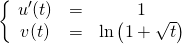


 et
et  Par intégration par parties,
![\displaystyle F(x) = \left [ t \, \ln \left ( 1 + \sqrt{t} \right)\right] _{0} ^x](https://groupe-reussite.fr/ressources/wp-content/ql-cache/quicklatex.com-9a7d3c152b409071067da243bd756b80_l3.png "Rendered by QuickLaTeX.com")
![\displaystyle F(x) = \left [ t \, \ln \left ( 1 + \sqrt{t} \right)\right] _{0} ^x](data:image/svg+xml,%3Csvg%20xmlns=%22http://www.w3.org/2000/svg%22%20viewBox=%220%200%20189%2033%22%3E%3C/svg%3E "Rendered by QuickLaTeX.com")
 On utilise maintenant un changement de variable pour calculer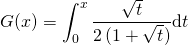
 La fonction
 est de classe sur (
 )
Si
)
Si 
 ,
,  et si
et si  ,
,  .
.
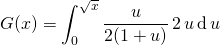

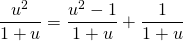


![G(x) = \displaystyle \left [ \frac {u ^2} 2 - u + \ln(1 + u) \right] _0 ^{\sqrt{x}}](https://groupe-reussite.fr/ressources/wp-content/ql-cache/quicklatex.com-9c67f7c14abc5b04b7b1e5ae11d05aa1_l3.png "Rendered by QuickLaTeX.com")
![G(x) = \displaystyle \left [ \frac {u ^2} 2 - u + \ln(1 + u) \right] _0 ^{\sqrt{x}}](data:image/svg+xml,%3Csvg%20xmlns=%22http://www.w3.org/2000/svg%22%20viewBox=%220%200%20244%2050%22%3E%3C/svg%3E "Rendered by QuickLaTeX.com") Une primitive de
Une primitive de 
 sur est

 .
Question 2
Primitives de
.
Question 2
Primitives de 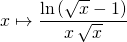
 .
Correction : On se place sur
.
Correction : On se place sur ![I = \; ]1 , \, + \infty[](https://groupe-reussite.fr/ressources/wp-content/ql-cache/quicklatex.com-b02ba176bbdcb68b41481b389818da3f_l3.png "Rendered by QuickLaTeX.com")
![I = \; ]1 , \, + \infty[](data:image/svg+xml,%3Csvg%20xmlns=%22http://www.w3.org/2000/svg%22%20viewBox=%220%200%2094%2018%22%3E%3C/svg%3E "Rendered by QuickLaTeX.com") .
Si ,
.
Si , 

 La fonction est de classe sur
  (et
(et  ).
Si
).
Si 
 ,
,  et si , .
Par changement de variable
et si , .
Par changement de variable



 et
et  sont des fonctions de classe sur .
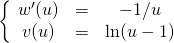
 et
et  Par intégration par parties,
![\displaystyle F(x)= \left [ \frac { - 2 \ln(u - 1)} {u} \right] _ 2^{\sqrt{x}}](https://groupe-reussite.fr/ressources/wp-content/ql-cache/quicklatex.com-176dac12ac258df928fdeb859b9e708a_l3.png "Rendered by QuickLaTeX.com")
![\displaystyle F(x)= \left [ \frac { - 2 \ln(u - 1)} {u} \right] _ 2^{\sqrt{x}}](data:image/svg+xml,%3Csvg%20xmlns=%22http://www.w3.org/2000/svg%22%20viewBox=%220%200%20198%2049%22%3E%3C/svg%3E "Rendered by QuickLaTeX.com")
 En utilisant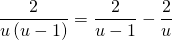
 ,
,  est égal à :
![\displaystyle \left [ \frac { - 2 \ln(u - 1)} {u} + 2 \ln(u - 1) - 2 \ln(u ) \right] _ 2^{\sqrt{x}}](https://groupe-reussite.fr/ressources/wp-content/ql-cache/quicklatex.com-6e0acb0a984a2ec87ab15f86dfea5a2c_l3.png "Rendered by QuickLaTeX.com")
![\displaystyle \left [ \frac { - 2 \ln(u - 1)} {u} + 2 \ln(u - 1) - 2 \ln(u ) \right] _ 2^{\sqrt{x}}](data:image/svg+xml,%3Csvg%20xmlns=%22http://www.w3.org/2000/svg%22%20viewBox=%220%200%20308%2049%22%3E%3C/svg%3E "Rendered by QuickLaTeX.com")

 est une primitive de
soit aussi
est une primitive de
soit aussi


1. Avec un peu de réflexion des primitives simples
Question 1
Primitives de 
Correction :
En notant 
 , on remarque que
  qui est la dérivée de
 .
Donc les primitives de sur
.
Donc les primitives de sur  sont les fonctions
  où
où  .
.
, on remarque que  qui est la dérivée de .
Donc les primitives de sur
qui est la dérivée de .
Donc les primitives de sur  sont les fonctions
  où
où  .
.Question 2
Si  , primitives de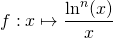
Correction :
On se place sur 
 .
On remarque que
.
On remarque que 
 avec
avec  .
Primitives :
.
Primitives : 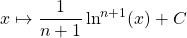
 .
Question 3
Primitives de
.
Question 3
Primitives de 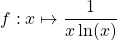
 Correction : On se place sur
 ![]0 , \, 1[](https://groupe-reussite.fr/ressources/wp-content/ql-cache/quicklatex.com-facbfcd0df3dea6b02bab204099c48b5_l3.png "Rendered by QuickLaTeX.com")
![]0 , \, 1[](data:image/svg+xml,%3Csvg%20xmlns=%22http://www.w3.org/2000/svg%22%20viewBox=%220%200%2039%2018%22%3E%3C/svg%3E "Rendered by QuickLaTeX.com") ou sur
ou sur ![]1\, , \, + \infty[](data:image/svg+xml,%3Csvg%20xmlns=%22http://www.w3.org/2000/svg%22%20viewBox=%220%200%2065%2018%22%3E%3C/svg%3E "Rendered by QuickLaTeX.com") .
On remarque que
.
On remarque que 
 avec .
Primitives :
avec .
Primitives : 
 .
Question 4
Soit
.
Question 4
Soit 
 . Primitives de
  .
Correction : On se place sur
.
Correction : On se place sur ![]1 , + \infty[](https://groupe-reussite.fr/ressources/wp-content/ql-cache/quicklatex.com-a1471e0e483b1ab6ee5cd4acfd9de88a_l3.png "Rendered by QuickLaTeX.com")
![]1 , + \infty[](data:image/svg+xml,%3Csvg%20xmlns=%22http://www.w3.org/2000/svg%22%20viewBox=%220%200%2059%2018%22%3E%3C/svg%3E "Rendered by QuickLaTeX.com") pour avoir
pour avoir  .
.
 avec
avec  .
.

 Si
Si  ,
primitives :
,
primitives : 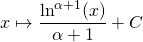
 .
Si
.
Si  ,
primitives :
,
primitives : 
 .
Question 5
Si
.
Question 5
Si  , primitives de
  Correction : On se place sur
 ![]- a,\, a[](https://groupe-reussite.fr/ressources/wp-content/ql-cache/quicklatex.com-ac32f14aa520aa18b1ef482cef442dad_l3.png "Rendered by QuickLaTeX.com")
![]- a,\, a[](data:image/svg+xml,%3Csvg%20xmlns=%22http://www.w3.org/2000/svg%22%20viewBox=%220%200%2061%2018%22%3E%3C/svg%3E "Rendered by QuickLaTeX.com") et on écrit
et on écrit  Primitives :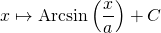
 .
Question 6
Si et
.
Question 6
Si et  , primitives de
  Correction :
 Primitives :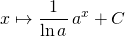
 .
Question 7
Primitives de
.
Question 7
Primitives de

 et
et  .
Question 8
Primitives de
.
Question 8
Primitives de
 et .
Question 9
Primitives de
et .
Question 9
Primitives de 
 .
Question 10
Primitives de
.
Question 10
Primitives de 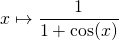
 .
Question 11
Primitives de
.
Question 11
Primitives de 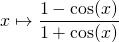
 .
Question 12
Primitives de
.
Question 12
Primitives de 
 .
Question 13
Primitives de
.
Question 13
Primitives de 
 .
Question 14
Primitives de
.
Question 14
Primitives de 
 où
où  .
Question 15
Primitives de
.
Question 15
Primitives de 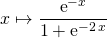
 Question 17
Soit . Primitives de
Question 17
Soit . Primitives de  .
Correction : On se place sur
.
Correction : On se place sur ![]- \infty,\, a[](https://groupe-reussite.fr/ressources/wp-content/ql-cache/quicklatex.com-99076433df63c63d59408c4b8a173b4d_l3.png "Rendered by QuickLaTeX.com")
![]- \infty,\, a[](data:image/svg+xml,%3Csvg%20xmlns=%22http://www.w3.org/2000/svg%22%20viewBox=%220%200%2069%2018%22%3E%3C/svg%3E "Rendered by QuickLaTeX.com") ou ou .
On cherche
ou ou .
On cherche 
 et
et  réels tels que si ,



 On obtient les CNS
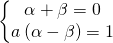



 Les primitives sont les fonctions :
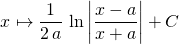
 .
Question 18
Primitives de
.
Question 18
Primitives de 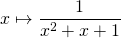
 .
Correction : Le dénominateur n’a pas de racine réelle, on l’écrit comme somme de deux carrés.
.
Correction : Le dénominateur n’a pas de racine réelle, on l’écrit comme somme de deux carrés.

 Puis
Puis 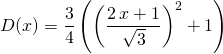
 .
.
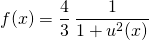
 avec
avec  .
Une primitive
.
Une primitive 
 est définie par

 .
Ls primitives s’écrivent :
.
Ls primitives s’écrivent :

 .
Question 19
Primitives de
.
Question 19
Primitives de 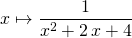
 .
Correction : est continue sur .
Le dénominateur n’a pas de racine réelle. On l’écrit comme somme de deux carrés.
.
Correction : est continue sur .
Le dénominateur n’a pas de racine réelle. On l’écrit comme somme de deux carrés.



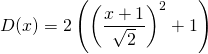

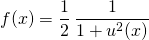 avec
avec 
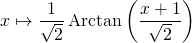
 est une primitive de .
Question 20
Primitives de
est une primitive de .
Question 20
Primitives de 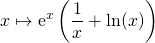
 Correction: On remarque que
 avec .
Les primitives sont les fonctions définies sur
avec .
Les primitives sont les fonctions définies sur  par
par  Question 21
Primitives de
Question 21
Primitives de 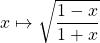
 Question 22
Primitives de
Question 22
Primitives de 

.
On remarque que avec  .
Primitives : .
Question 3
Primitives de
Correction : On se place sur ou sur
.
Primitives : .
Question 3
Primitives de
Correction : On se place sur ou sur ![]1\, , \, + \infty[](https://groupe-reussite.fr/ressources/wp-content/ql-cache/quicklatex.com-0c2fbf6ff9e8e37bf55e11ff988a3072_l3.png "Rendered by QuickLaTeX.com") .
On remarque que avec .
Primitives : .
Question 4
Soit . Primitives de
.
On remarque que avec .
Primitives : .
Question 4
Soit . Primitives de 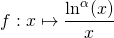 .
Correction : On se place sur pour avoir
.
Correction : On se place sur pour avoir  .
avec
.
avec  .
Si
.
Si  ,
primitives : .
Si
,
primitives : .
Si  ,
primitives : .
Question 5
Si , primitives de
,
primitives : .
Question 5
Si , primitives de 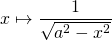 Correction : On se place sur et on écrit
 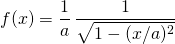 Primitives : .
Question 6
Si et
Primitives : .
Question 6
Si et  , primitives de
  Correction :
Primitives : .
Question 7
Primitives de
et
Correction :
Primitives : .
Question 7
Primitives de
et  .
Question 8
Primitives de
et
.
Question 8
Primitives de
et  .
Question 9
Primitives de .
Question 10
Primitives de .
Question 11
Primitives de .
Question 12
Primitives de .
Question 13
Primitives de .
Question 14
Primitives de où
.
Question 9
Primitives de .
Question 10
Primitives de .
Question 11
Primitives de .
Question 12
Primitives de .
Question 13
Primitives de .
Question 14
Primitives de où  .
Question 15
Primitives de
Question 17
Soit . Primitives de
.
Question 15
Primitives de
Question 17
Soit . Primitives de  .
Correction : On se place sur ou
.
Correction : On se place sur ou ![]- a ,\, a[](https://groupe-reussite.fr/ressources/wp-content/ql-cache/quicklatex.com-b0db4ab9468a88b5815175b63aefed06_l3.png "Rendered by QuickLaTeX.com") ou
ou ![]a , +\infty[](https://groupe-reussite.fr/ressources/wp-content/ql-cache/quicklatex.com-37d13964d8c8fa4d7b361e0d52093f53_l3.png "Rendered by QuickLaTeX.com") .
On cherche et
.
On cherche et  réels tels que si
  ,
On obtient les CNS
,
On obtient les CNS

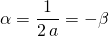 Les primitives sont les fonctions :
.
Question 18
Primitives de .
Correction : Le dénominateur n’a pas de racine réelle, on l’écrit comme somme de deux carrés.
Puis .
avec
Les primitives sont les fonctions :
.
Question 18
Primitives de .
Correction : Le dénominateur n’a pas de racine réelle, on l’écrit comme somme de deux carrés.
Puis .
avec 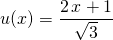 .
Une primitive est définie par
.
Ls primitives s’écrivent :
.
Question 19
Primitives de .
Correction : est continue sur .
Le dénominateur n’a pas de racine réelle. On l’écrit comme somme de deux carrés.
.
Une primitive est définie par
.
Ls primitives s’écrivent :
.
Question 19
Primitives de .
Correction : est continue sur .
Le dénominateur n’a pas de racine réelle. On l’écrit comme somme de deux carrés.
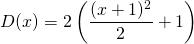 avec
avec 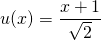 est une primitive de .
Question 20
Primitives de
Correction: On remarque que avec .
Les primitives sont les fonctions définies sur par
est une primitive de .
Question 20
Primitives de
Correction: On remarque que avec .
Les primitives sont les fonctions définies sur par  Question 21
Primitives de
Question 22
Primitives de
Question 21
Primitives de
Question 22
Primitives de
2. Par intégration par parties
Question 1
Primitives de 
 .
Correction : On se place sur
.
Correction : On se place sur ![]- 1 , \, 1[](https://groupe-reussite.fr/ressources/wp-content/ql-cache/quicklatex.com-33a06015c45c3d8f7872ac1965787698_l3.png "Rendered by QuickLaTeX.com") .
Soit si
.
Soit si ![x \in \; ]- 1,\, 1[](https://groupe-reussite.fr/ressources/wp-content/ql-cache/quicklatex.com-9b45a3e89f4a1a96d0d5620519951658_l3.png "Rendered by QuickLaTeX.com")
![x \in \; ]- 1,\, 1[](data:image/svg+xml,%3Csvg%20xmlns=%22http://www.w3.org/2000/svg%22%20viewBox=%220%200%2092%2018%22%3E%3C/svg%3E "Rendered by QuickLaTeX.com") ,
,

 et
et  sont des fonctions classe sur .
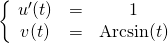
 et
et  Par intégration par parties,
![\displaystyle F(x) = \left [ t \, \textrm{Arcsin}(t) \right] _0 ^x - \int_0 ^x \frac {t} {\sqrt{1 - t ^2}} \textrm{d} t](https://groupe-reussite.fr/ressources/wp-content/ql-cache/quicklatex.com-131a091e53ce4128238fa3d1126f4626_l3.png "Rendered by QuickLaTeX.com")
![\displaystyle F(x) = \left [ t \, \textrm{Arcsin}(t) \right] _0 ^x - \int_0 ^x \frac {t} {\sqrt{1 - t ^2}} \textrm{d} t](data:image/svg+xml,%3Csvg%20xmlns=%22http://www.w3.org/2000/svg%22%20viewBox=%220%200%20289%2041%22%3E%3C/svg%3E "Rendered by QuickLaTeX.com")
![\displaystyle F(x) = \left [ t \, \textrm{Arcsin}(t) + {\sqrt{1 - t ^2}} \right] _0 ^x](https://groupe-reussite.fr/ressources/wp-content/ql-cache/quicklatex.com-a891bbcb47e79370f81104af942b116d_l3.png "Rendered by QuickLaTeX.com")
![\displaystyle F(x) = \left [ t \, \textrm{Arcsin}(t) + {\sqrt{1 - t ^2}} \right] _0 ^x](data:image/svg+xml,%3Csvg%20xmlns=%22http://www.w3.org/2000/svg%22%20viewBox=%220%200%20250%2033%22%3E%3C/svg%3E "Rendered by QuickLaTeX.com")

 est une primitive de sur .
Remarque : On peut prolonger
est une primitive de sur .
Remarque : On peut prolonger  par continuité en
 par
par  et
et  .
est continue sur
.
est continue sur ![[ - 1 \, ,1]](data:image/svg+xml,%3Csvg%20xmlns=%22http://www.w3.org/2000/svg%22%20viewBox=%220%200%2048%2018%22%3E%3C/svg%3E "Rendered by QuickLaTeX.com") ,
,  admet une limite égale à
  en 1 (resp.
  en
en  )
Alors est dérivable en et ,
)
Alors est dérivable en et ,  .
Donc est une primitive de sur .
Question 2
Primitives de
.
Donc est une primitive de sur .
Question 2
Primitives de 
 .
Correction : On se place sur
.
Correction : On se place sur ![I_k = ] - \pi/2 + k \,\pi ,\, \pi/2 + k \, \pi[](https://groupe-reussite.fr/ressources/wp-content/ql-cache/quicklatex.com-932438fd0c210734122f00c4cbaa8874_l3.png "Rendered by QuickLaTeX.com")
![I_k = ] - \pi/2 + k \,\pi ,\, \pi/2 + k \, \pi[](data:image/svg+xml,%3Csvg%20xmlns=%22http://www.w3.org/2000/svg%22%20viewBox=%220%200%20224%2018%22%3E%3C/svg%3E "Rendered by QuickLaTeX.com") où
où  .
Soit
.
Soit  et
et  .
Les fonctions
.
Les fonctions 
 et
et  sont de classe sur
  .
.
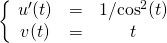
 et
et  Par intégration par parties,
![\displaystyle F(x) = \left [ t \, \tan t \right] _{k \, \pi} ^x - \int_{k\, \pi} ^x \frac {\sin(t) } {\cos(t)} , \textrm{d} t](https://groupe-reussite.fr/ressources/wp-content/ql-cache/quicklatex.com-22bb549f5e0dee42e4e3a003daa85c06_l3.png "Rendered by QuickLaTeX.com")
![\displaystyle F(x) = \left [ t \, \tan t \right] _{k \, \pi} ^x - \int_{k\, \pi} ^x \frac {\sin(t) } {\cos(t)} , \textrm{d} t](data:image/svg+xml,%3Csvg%20xmlns=%22http://www.w3.org/2000/svg%22%20viewBox=%220%200%20263%2042%22%3E%3C/svg%3E "Rendered by QuickLaTeX.com") .
.
![\displaystyle F(x) = \left [ t \, \tan t + \ln \vert \cos t \vert \right] _{k \, \pi} ^x](https://groupe-reussite.fr/ressources/wp-content/ql-cache/quicklatex.com-89afd0e6c1ccfe93b4154dd536c24c7e_l3.png "Rendered by QuickLaTeX.com")
![\displaystyle F(x) = \left [ t \, \tan t + \ln \vert \cos t \vert \right] _{k \, \pi} ^x](data:image/svg+xml,%3Csvg%20xmlns=%22http://www.w3.org/2000/svg%22%20viewBox=%220%200%20222%2019%22%3E%3C/svg%3E "Rendered by QuickLaTeX.com")

 est une primitive de sur .
Question 3
Primitives de
est une primitive de sur .
Question 3
Primitives de 
 .
Correction : Plutôt que de faire deux intégrations par parties, il vaut mieux chercher une primitive sous la forme
.
Correction : Plutôt que de faire deux intégrations par parties, il vaut mieux chercher une primitive sous la forme 
 .
.






 ssi
ssi
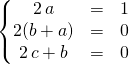
 ssi
ssi 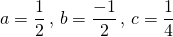
 .
.

 est une primitive de .
Question 4
Primitives de
est une primitive de .
Question 4
Primitives de 
 .
Correction : Utilisation de l’indication
Si
.
Correction : Utilisation de l’indication
Si 
 , est dérivable sur car
  donc
donc  .
.

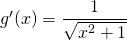
 .
On cherche une primitive sur
Soit si
.
On cherche une primitive sur
Soit si 
 ,
,  .
et
.
et  sont des fonctions de classe sur .
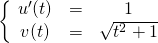
 et
et  Par intégration par parties,
![F(x) = \displaystyle \left [ t \sqrt{t ^2 + 1} \right] _ 0 ^x - \int_0 ^x \frac {t ^2} {\sqrt{t ^2 + 1}} \, \textrm{d} \, t](https://groupe-reussite.fr/ressources/wp-content/ql-cache/quicklatex.com-565458a87b9703b0084a31fec27da7b2_l3.png "Rendered by QuickLaTeX.com")
![F(x) = \displaystyle \left [ t \sqrt{t ^2 + 1} \right] _ 0 ^x - \int_0 ^x \frac {t ^2} {\sqrt{t ^2 + 1}} \, \textrm{d} \, t](data:image/svg+xml,%3Csvg%20xmlns=%22http://www.w3.org/2000/svg%22%20viewBox=%220%200%20291%2043%22%3E%3C/svg%3E "Rendered by QuickLaTeX.com") On écrit
On écrit 



 On utilise l’indication


![\displaystyle \quad \quad \quad \quad \quad \quad + \left [ \ln \left ( t + \sqrt{t ^2 + 1} \right ) \right] _ 0 ^x](data:image/svg+xml,%3Csvg%20xmlns=%22http://www.w3.org/2000/svg%22%20viewBox=%220%200%20171%2033%22%3E%3C/svg%3E "Rendered by QuickLaTeX.com")

 Une primitive est

 Question 5
Primitives de
Question 5
Primitives de 
 .
.
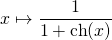 .
Correction : On définit si ,
.
Correction : On définit si ,
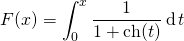
 .
.
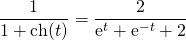
 .
Après multiplication du numérateur et dénominateur par
.
Après multiplication du numérateur et dénominateur par 
 :
:
 .
.
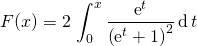
 .
En notant
.
En notant 
 , on a écrit
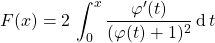

![\displaystyle F(x) = \left [ \frac { - 2} {\varphi(t) + 1} \right ] _ 0 ^x = \left [ \frac { - 2} {\textrm{e} ^t + 1} \right ] _ 0 ^x](https://groupe-reussite.fr/ressources/wp-content/ql-cache/quicklatex.com-24b1fe6ecd5a134f5b3df5f32355c812_l3.png "Rendered by QuickLaTeX.com")
![\displaystyle F(x) = \left [ \frac { - 2} {\varphi(t) + 1} \right ] _ 0 ^x = \left [ \frac { - 2} {\textrm{e} ^t + 1} \right ] _ 0 ^x](data:image/svg+xml,%3Csvg%20xmlns=%22http://www.w3.org/2000/svg%22%20viewBox=%220%200%20253%2045%22%3E%3C/svg%3E "Rendered by QuickLaTeX.com")

 est une primitive de .
Question 2
Primitives de
est une primitive de .
Question 2
Primitives de 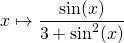
 .
Correction :
.
Correction :
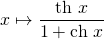
 .
Correction : On cherche une primitive sur
.
Correction : On cherche une primitive sur

 On note
 , on remarque que

 .
donc
.
donc 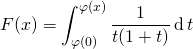
 En écrivant
  , on peut écrire puis simplifier les fractions :

 et obtenir :


![F(x) = \displaystyle \left [ \ln \frac t {1 + t} \right ] _1 ^{\textrm{ch } x}](https://groupe-reussite.fr/ressources/wp-content/ql-cache/quicklatex.com-e3d6c9570b4db456bfb1b9312218a2ae_l3.png "Rendered by QuickLaTeX.com")
![F(x) = \displaystyle \left [ \ln \frac t {1 + t} \right ] _1 ^{\textrm{ch } x}](data:image/svg+xml,%3Csvg%20xmlns=%22http://www.w3.org/2000/svg%22%20viewBox=%220%200%20165%2050%22%3E%3C/svg%3E "Rendered by QuickLaTeX.com") .
.
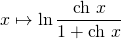
 est une primitive de .
Question 4
Primitives de
est une primitive de .
Question 4
Primitives de 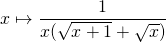
 .
Question 5
Primitives de
.
Question 5
Primitives de 
 .
Question 6
Primitives de
.
Question 6
Primitives de 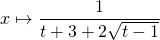
 .
.
.
Correction : On se place sur .
Soit si ,
et  sont des fonctions classe
  sur .
et
sur .
et 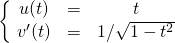 Par intégration par parties,
est une primitive de sur .
Remarque : On peut prolonger par continuité en par
Par intégration par parties,
est une primitive de sur .
Remarque : On peut prolonger par continuité en par  et
et  .
est continue sur
.
est continue sur ![[ - 1 \, ,1]](https://groupe-reussite.fr/ressources/wp-content/ql-cache/quicklatex.com-35dcb1864c0c158ed4f5f09d873011fa_l3.png "Rendered by QuickLaTeX.com") ,
,  admet une limite égale à
  en 1 (resp.
  en
en  )
Alors est dérivable en et
)
Alors est dérivable en et  ,
,  .
Donc est une primitive de sur .
Question 2
Primitives de .
Correction : On se place sur où
.
Donc est une primitive de sur .
Question 2
Primitives de .
Correction : On se place sur où  .
Soit et
.
Soit et 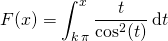 .
Les fonctions et
.
Les fonctions et  sont de classe sur
  .
et
.
et 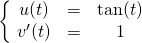 Par intégration par parties,
.
est une primitive de sur .
Question 3
Primitives de .
Correction : Plutôt que de faire deux intégrations par parties, il vaut mieux chercher une primitive sous la forme .
Par intégration par parties,
.
est une primitive de sur .
Question 3
Primitives de .
Correction : Plutôt que de faire deux intégrations par parties, il vaut mieux chercher une primitive sous la forme .
 ssi
ssi .
est une primitive de .
Question 4
Primitives de .
Correction : Utilisation de l’indication
Si ,
ssi
ssi .
est une primitive de .
Question 4
Primitives de .
Correction : Utilisation de l’indication
Si ,  est dérivable sur car
  donc
donc  .
.
On cherche une primitive sur
Soit si ,
.
.
On cherche une primitive sur
Soit si ,  .
et
.
et  sont des fonctions de classe sur .
et
sont des fonctions de classe sur .
et 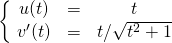 Par intégration par parties,
On écrit
Par intégration par parties,
On écrit
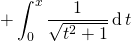 On utilise l’indication
![\displaystyle \quad \quad \quad \quad \quad \quad + \left [ \ln \left ( t + \sqrt{t ^2 + 1} \right ) \right] _ 0 ^x](https://groupe-reussite.fr/ressources/wp-content/ql-cache/quicklatex.com-284aebbebbf27653e3ec3b66f74b8650_l3.png "Rendered by QuickLaTeX.com") Une primitive est
Question 5
Primitives de .
Une primitive est
Question 5
Primitives de .
3. Changement de variable
Les changements de variables sont donnés dans l’indication. Vous pouvez ainsi essayer de le deviner avant de consulter l’indication. Question 1 Primitives de.
Correction : On définit si ,
.
.
Après multiplication du numérateur et dénominateur par :
.
.
En notant , on a écrit
est une primitive de .
Question 2
Primitives de .
Correction :
On cherche une primitive sur et on écrit  .
Soit
.
Soit 
 un réel.
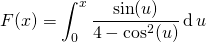
 s’écrit si l’on note
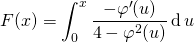

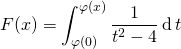
 On cherche deux réels
 et
et  tels que
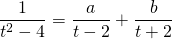
 ce qui donne les deux équations

 et
et 

 et
et  .
.


![\displaystyle F(x) = \left [\frac 1 4 \ln \left ( \frac {\vert t - 2 \vert } {2 + t} \right ) \right ] _ 1 ^{\cos x }](https://groupe-reussite.fr/ressources/wp-content/ql-cache/quicklatex.com-e84072283ff2e3fe7f21d54a2ab7b294_l3.png "Rendered by QuickLaTeX.com")
![\displaystyle F(x) = \left [\frac 1 4 \ln \left ( \frac {\vert t - 2 \vert } {2 + t} \right ) \right ] _ 1 ^{\cos x }](data:image/svg+xml,%3Csvg%20xmlns=%22http://www.w3.org/2000/svg%22%20viewBox=%220%200%20219%2046%22%3E%3C/svg%3E "Rendered by QuickLaTeX.com") On remarque que
On remarque que  .
.
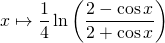
 est une primitive de .
Question 3
Primitives de et on écrit 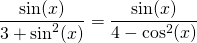 .
Soit un réel.
s’écrit si l’on note
On cherche deux réels et
.
Soit un réel.
s’écrit si l’on note
On cherche deux réels et  tels que
ce qui donne les deux équations
et
tels que
ce qui donne les deux équations
et 
 et
et  .
On remarque que .
est une primitive de .
.
Correction : On cherche une primitive sur
On note , on remarque que
.
donc
En écrivant , on peut écrire puis simplifier les fractions :
et obtenir :
.
est une primitive de .
Question 4
Primitives de .
Question 5
Primitives de .
Question 6
Primitives de .
.
On remarque que .
est une primitive de .
.
Correction : On cherche une primitive sur
On note , on remarque que
.
donc
En écrivant , on peut écrire puis simplifier les fractions :
et obtenir :
.
est une primitive de .
Question 4
Primitives de .
Question 5
Primitives de .
Question 6
Primitives de .
4. Et avec les deux théorèmes
Question 1 Primitives de .
Correction : On se place sur .
Si ,  et
et  sont des fonctions de classe sur
  .
et
.
et  Par intégration par parties,
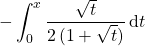 On utilise maintenant un changement de variable pour calculer
La fonction est de classe
On utilise maintenant un changement de variable pour calculer
La fonction est de classe  sur (
sur ( )
Si ,
)
Si ,  et si
et si  ,
,  .
.
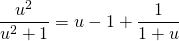 Une primitive de sur est
.
Question 2
Primitives de .
Correction : On se place sur .
Si ,
Une primitive de sur est
.
Question 2
Primitives de .
Correction : On se place sur .
Si , 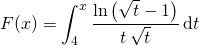 La fonction est de classe sur
  (et
(et  ).
Si ,
).
Si ,  et si , .
Par changement de variable
et si , .
Par changement de variable
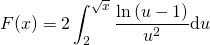
 et
et  sont des fonctions de classe sur .
et
sont des fonctions de classe sur .
et 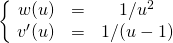 Par intégration par parties,
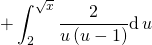 En utilisant ,
  est égal à :
est une primitive de
soit aussi
est égal à :
est une primitive de
soit aussi
5. Fonctions paires, impaires, périodiques
Question 1 Toute primitive d’une fonction définie sur et périodique de période  est périodique de période
  . Vrai ou Faux ?
Correction :
. Vrai ou Faux ?
Correction :  est périodique de période et
  est une primitive de qui n’est pas périodique.
Question 2.
Si est définie sur et -périodique, si est une primitive de telle que
est une primitive de qui n’est pas périodique.
Question 2.
Si est définie sur et -périodique, si est une primitive de telle que  , est -périodique
Vrai ou Faux ?
Correction : On note
, est -périodique
Vrai ou Faux ?
Correction : On note  .
est dérivable sur et
.
est dérivable sur et 
 .
Donc est constante et comme
.
Donc est constante et comme  , est nulle, ce qui donne : est – périodique.
Question 3
Toute primitive d’une fonction continue sur et paire est impaire. Vrai ou Faux ?
Correction : La fonction
, est nulle, ce qui donne : est – périodique.
Question 3
Toute primitive d’une fonction continue sur et paire est impaire. Vrai ou Faux ?
Correction : La fonction  est paire,
  est une primitive de qui n’est pas impaire.
Question 4
La primitive nulle en 0 d’une fonction continue paire sur est impaire. Vrai ou Faux ?
Correction :
Soit une fonction continue sur et la primitive de vérifiant
est une primitive de qui n’est pas impaire.
Question 4
La primitive nulle en 0 d’une fonction continue paire sur est impaire. Vrai ou Faux ?
Correction :
Soit une fonction continue sur et la primitive de vérifiant  .
On note pour
.
On note pour  ,
,  .
est dérivable et pour tout réel ,
.
est dérivable et pour tout réel ,


 .
est une fonction constante sur avec
.
est une fonction constante sur avec  , donc
  ce qui prouve que est impaire.
Question 5
Toute primitive d’une fonction définie sur et impaire est paire.
Exercice 1
Si est continue sur
ce qui prouve que est impaire.
Question 5
Toute primitive d’une fonction définie sur et impaire est paire.
Exercice 1
Si est continue sur ![[ - a,\, a]](https://groupe-reussite.fr/ressources/wp-content/ql-cache/quicklatex.com-aafce7f9a3f38405d1d9606e58cadff5_l3.png "Rendered by QuickLaTeX.com") à valeurs dans
à valeurs dans  si est paire,
  si est impaire,
  .
Exercice 2
Si est continue sur à valeurs dans et périodique de période .
Pour tout
.
Exercice 2
Si est continue sur à valeurs dans et périodique de période .
Pour tout  ,
,


 .
.
6. Calcul d’intégrales
Pour chaque question, on cherchera le domaine de dérivabilité et la dérivée. Exercice 1 Calculer .
Correction : et
.
Correction : et  sont des fonctions de classe sur
 ![[1 , e]](https://groupe-reussite.fr/ressources/wp-content/ql-cache/quicklatex.com-71e7dc50d14a42fc01d4b7897bb41c1a_l3.png "Rendered by QuickLaTeX.com") .
.
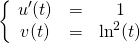 et
et 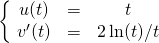 Par intégration par parties,

![I = \left [ t \ln^2 (t) \right] _1^{\textrm{e} } - \int_1^{\textrm{e} } 2 \, t \ln(t) \, \textrm{d} \, t](https://groupe-reussite.fr/ressources/wp-content/ql-cache/quicklatex.com-a62761981ff0635f0b43ec364f7d686b_l3.png "Rendered by QuickLaTeX.com") et en utilisant une primitive classique :
et en utilisant une primitive classique :
![I = \left [ t \ln^2 (t) - 2 \, t \, \ln(t) + 2\, t \right] _1^{\textrm{e} }](https://groupe-reussite.fr/ressources/wp-content/ql-cache/quicklatex.com-d2b0ead4eb6638ba1c42f5082f8f2d0f_l3.png "Rendered by QuickLaTeX.com")

 .
Exercice 2
Calculer
.
Exercice 2
Calculer 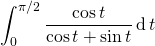 Correction :
 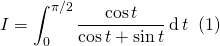 La fonction
  est une fonction de classe sur
 ![[0 , \, \pi/2]](https://groupe-reussite.fr/ressources/wp-content/ql-cache/quicklatex.com-c4ad48fa281ecfe0414f47324f2765f7_l3.png "Rendered by QuickLaTeX.com") .
.
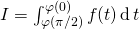 Par le théorème de changement de variable,
  est égal à

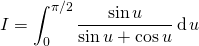 (2)
En additionnant (1) et (2) :
(2)
En additionnant (1) et (2) :
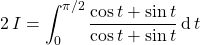 donc
donc 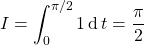 alors
alors  .
Exercice 3
Calculer
.
Exercice 3
Calculer 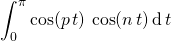 où
où  et
et  sont entiers.
Correction : On note
sont entiers.
Correction : On note  avec un peu de trigonométrie en maths sup :

 Puis si
![\, J_ k = \int _{0 } ^{\pi} \cos(k \, t) \, \textrm{d} \, t =\displaystyle \left [ \frac 1 k \sin(k \, t) \right] _ 0 ^{\pi} =0](https://groupe-reussite.fr/ressources/wp-content/ql-cache/quicklatex.com-dcd5cfbea26fd449214da15c1def8663_l3.png "Rendered by QuickLaTeX.com") et
et ![\int _{0 } ^{\pi} \cos(0. \, t) \, \textrm{d} \, t = \left [\; t \; \right] _ 0 ^{\pi} =\pi](https://groupe-reussite.fr/ressources/wp-content/ql-cache/quicklatex.com-112c3da0347aaba8691aba3f2bc8ea4f_l3.png "Rendered by QuickLaTeX.com") .
si
.
si  ,
,  .
si
.
si  ,
,
 .
si
.
si  ,
,  et
et  donc
donc  .
Exercice 4
Calculer
.
Exercice 4
Calculer 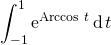 .
Correction : est de classe sur
.
Correction : est de classe sur ![[0 , \, \pi]](https://groupe-reussite.fr/ressources/wp-content/ql-cache/quicklatex.com-6cc97bde551a12566afcb6b96525840d_l3.png "Rendered by QuickLaTeX.com") à valeurs dans
à valeurs dans ![[-1 , \, 1]](https://groupe-reussite.fr/ressources/wp-content/ql-cache/quicklatex.com-656d61fca33cce79d81ad52345d4b11c_l3.png "Rendered by QuickLaTeX.com") .
.
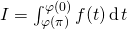 Par le théorème de changement de variable,
  .
.
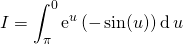
 .
.
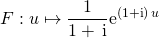 est une primitive de
  .
.
 et
et  est une primitive de
 .
On termine avec
.
On termine avec  Réponse :
  .
Exercice 5
Calculer :
.
Exercice 5
Calculer : 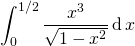 .
Correction :
.
Correction : ![\varphi : [0 , \pi/6] \to [0 , 1/2], \, u \mapsto \sin(u)](https://groupe-reussite.fr/ressources/wp-content/ql-cache/quicklatex.com-273c94241e57642a99e623de81a3fa62_l3.png "Rendered by QuickLaTeX.com") est une fonction de classe et
est une fonction de classe et
 Par le théorème de changement de variable,
  .
.
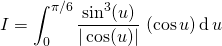
 sur le segment d’intégration.
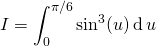

![I = \displaystyle \left [ - \cos(u) + \frac 1 3 \cos ^3(u) \right ] _ 0 ^{\pi/6}](https://groupe-reussite.fr/ressources/wp-content/ql-cache/quicklatex.com-e4abf6785170e2ca469179f1748559ed_l3.png "Rendered by QuickLaTeX.com")
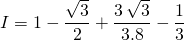
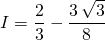 .
Exercice 6
Si
.
Exercice 6
Si  , justifier l’existence de
  .
Calculer
.
Calculer  .
Correction : Soit .
Soit
.
Correction : Soit .
Soit  ,
,  ,
,  est une fonction continue sur
 ![[0 ,\, 1]](https://groupe-reussite.fr/ressources/wp-content/ql-cache/quicklatex.com-44124a360bcb63431376ef5cb47ec12d_l3.png "Rendered by QuickLaTeX.com") ce qui justifie l’existence de
ce qui justifie l’existence de  .
On note
.
On note  la primitive de s’annulant en 1.
Alors si
la primitive de s’annulant en 1.
Alors si ![a \in \; ]0 , 1],](https://groupe-reussite.fr/ressources/wp-content/ql-cache/quicklatex.com-b7048c6faedd5f93062c96084c1d71c8_l3.png "Rendered by QuickLaTeX.com")
 Comme est continue en
  , alors
  .
Il n’est pas possible d’intégrer par parties sur
.
Il n’est pas possible d’intégrer par parties sur ![[0 , \, 1]](https://groupe-reussite.fr/ressources/wp-content/ql-cache/quicklatex.com-6939af5bbe9a6a61a74ef4105f42ca8c_l3.png "Rendered by QuickLaTeX.com") en prenant pour l’une des fonctions la fonction
en prenant pour l’une des fonctions la fonction  , mais on peut intégrer par parties sur
 ![[a , \,1]](https://groupe-reussite.fr/ressources/wp-content/ql-cache/quicklatex.com-e9ca2b79620bd83f91f02c9823e3b2cd_l3.png "Rendered by QuickLaTeX.com") .
On définit
.
On définit
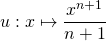 et
et  ,
ces fonctions étant de classe sur
,
ces fonctions étant de classe sur ![[a , \, 1]](https://groupe-reussite.fr/ressources/wp-content/ql-cache/quicklatex.com-48669f595523d60982ef86a4c8466f8b_l3.png "Rendered by QuickLaTeX.com") , on peut donc intégrer par parties :
, on peut donc intégrer par parties :
![I_n(a) = \displaystyle \left | \frac {x^{n + 1}} {n + 1} \ln(x) \right ] _ a ^1 - \int _a ^1 \frac {x ^{n+1} } {(n + 1) x } \, \textrm{d} \, x](https://groupe-reussite.fr/ressources/wp-content/ql-cache/quicklatex.com-b020024adefb49d40861c8ac160264b8_l3.png "Rendered by QuickLaTeX.com")
![I_n(a) = \displaystyle \left [ \frac {x^{n + 1}} {n + 1} \ln(x) - \frac {x^{n + 1}} {(n + 1) ^2} \right ] _ a ^1](https://groupe-reussite.fr/ressources/wp-content/ql-cache/quicklatex.com-ca201d05e31c07b544993ef6dd8dce4b_l3.png "Rendered by QuickLaTeX.com")

 Si tend vers , on obtient à la limite la valeur de
  :
: 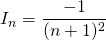 .
Exercice 7
Trouver tel que :
.
Exercice 7
Trouver tel que :  .
Exercice 8
Question 1
Soit une fonction continue sur
.
Exercice 8
Question 1
Soit une fonction continue sur ![[a ,\, b]](https://groupe-reussite.fr/ressources/wp-content/ql-cache/quicklatex.com-821e8a6fbd249ce90c96f1db30e37448_l3.png "Rendered by QuickLaTeX.com") à valeurs réelles telle que
à valeurs réelles telle que
![\quad \forall \, x \in [a , \, b] , \, f(a + b - x) = f(x)](https://groupe-reussite.fr/ressources/wp-content/ql-cache/quicklatex.com-b564acae379b5faf94668f4893eddfd7_l3.png "Rendered by QuickLaTeX.com") .
.
 Question 2
Calculer
Question 2
Calculer 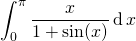 .
.
7. Intégrales de Wallis (le début)
Question 1 Soit si,  , alors
  .
Vrai ou Faux ?
Correction : En utilisant le changement de variable , de classe sur
.
Vrai ou Faux ?
Correction : En utilisant le changement de variable , de classe sur ![[0 ,\, \pi/2]](https://groupe-reussite.fr/ressources/wp-content/ql-cache/quicklatex.com-4152747be3eb309bd01afa3cd66d51c2_l3.png "Rendered by QuickLaTeX.com") ,
,
 soit
soit  .
Question 2
.
Question 2
 Correction : En utilisant le changement de variable
  , de classe sur
 ![[0 ,\, \pi]](https://groupe-reussite.fr/ressources/wp-content/ql-cache/quicklatex.com-b5a184d61a79ae56fa43f11d95a6c4fc_l3.png "Rendered by QuickLaTeX.com") ,
,


 .
On termine par la relation de Chasles :
.
On termine par la relation de Chasles :


 .
Question 3
.
Question 3
 Correction : En intégrant
  par parties avec les fonctions de classe sur :
 et
et  ,
,
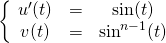 et
et 
![Wn = \left [ - \cos(t)\, \sin ^{n - 1} (t) \right ] _0 ^{\pi/2}](https://groupe-reussite.fr/ressources/wp-content/ql-cache/quicklatex.com-d34dccc00f1f387c149a35dd91b98c41_l3.png "Rendered by QuickLaTeX.com")
 .
En utilisant
.
En utilisant  , on obtient par linéarité de l’intégrale
  donc
donc  .
Question 4
.
Question 4
 . Vrai ou Faux ?
Correction : Soit pour
. Vrai ou Faux ?
Correction : Soit pour 

 .
La suite
.
La suite  est constante, donc
  .
Question 5.
.
Question 5.
 .
Question 6.
Valeur de
.
Question 6.
Valeur de  .
.
8. Une famille d’intégrales dépendant de deux paramètres
Si , on définit
 .
Question 1
Si
.
Question 1
Si  et , exprimer
  en fonction de
  .
Correction : On utilise une intégration par parties avec
.
Correction : On utilise une intégration par parties avec 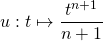 et
et  qui sont de classe sur
 ![[0 , \,1]](https://groupe-reussite.fr/ressources/wp-content/ql-cache/quicklatex.com-b23b63eacce8834d502aca39b9026366_l3.png "Rendered by QuickLaTeX.com") .
.
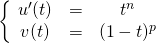 et
et 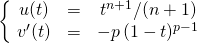
![\displaystyle I(n , \, p) = \left [ \frac {t ^{n + 1}} {n + 1}\, (1 - t) ^p \right]_0 ^1](https://groupe-reussite.fr/ressources/wp-content/ql-cache/quicklatex.com-97aa953565d77756eac8bdd77b73ace6_l3.png "Rendered by QuickLaTeX.com")
 donc
donc  .
Question 2
Calculer
.
Question 2
Calculer  pour
pour  .
Correction : On note si ,
.
Correction : On note si ,  et on raisonne par récurrence.

![\displaystyle I(0 , \, p) = \left [ \frac {- (1 - t) ^{p + 1} } {p + 1} \right] _0 ^1 = \frac 1 {p + 1}](https://groupe-reussite.fr/ressources/wp-content/ql-cache/quicklatex.com-db488674f6cda7ed760acac695ac601a_l3.png "Rendered by QuickLaTeX.com")
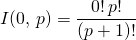 .
Donc
.
Donc  est vraie.
On suppose que
est vraie.
On suppose que  est vraie.
On utilise la formule de la question 1 en replaçant par
est vraie.
On utilise la formule de la question 1 en replaçant par  .
.

 puis avec :

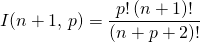 ce qui prouve
  .
La propriété a été démontrée par récurrence.
En particulier,
.
La propriété a été démontrée par récurrence.
En particulier, 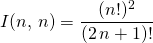 .
Question 3
Si
.
Question 3
Si  et
et  , calculer
 .
.
Correction :
Recherche : On cherche un changement de variable de la forme  tel que
 et
et  .
On résout donc le système
.
On résout donc le système
 ssi
ssi  On a donc obtenu
  .
Rédaction
.
Rédaction
![\varphi : [0 ,\, 1] \to [a , \, b], \, u \mapsto \displaystyle (b - a)\, u + a](https://groupe-reussite.fr/ressources/wp-content/ql-cache/quicklatex.com-60022b2723f80f2e8f96ee4588bcdf2a_l3.png "Rendered by QuickLaTeX.com")
 est de classe et
 donne par le théorème de changement de variable :

 et
et 



 .
.
Question 4
Soit  . Calculer

Correction : La fonction ![\varphi : |0 , \pi/2] \to [0 , 1] , \theta \mapsto \cos^2(\theta)](https://groupe-reussite.fr/ressources/wp-content/ql-cache/quicklatex.com-8275e7955c5363bdb0a3683bcdd2196a_l3.png "Rendered by QuickLaTeX.com") est une bijection de classe .
Par le théorème de changement de variable
est une bijection de classe .
Par le théorème de changement de variable




 .
.


 donc
donc 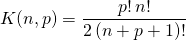 .
.
Question 5
Soit .
En déduire la valeur de 
Correction : 
 en utilisant le changement de variable
  ,
, 
 Puis par le changement de variable
  :
:



et par la relation de Chasles :
 donc
donc 
 .
.
Question 6
Si  , calculer
 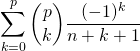 .
.
Correction : Si , 
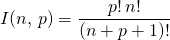 .
.
Par le binôme de Newton :
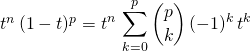
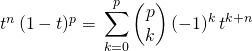 .
Par linéarité de l’intégrale :
.
Par linéarité de l’intégrale :
![\displaystyle I(n , p) = \sum _ {k = 0} ^p \binom p k \left [ \frac {( - 1) ^k \, t ^{n + k + 1} } {n + k + 1} \; \; \; \right] _ 0 ^1.](https://groupe-reussite.fr/ressources/wp-content/ql-cache/quicklatex.com-56dc13049ea639f13cb987e8279075bf_l3.png "Rendered by QuickLaTeX.com") soit
soit 